Electrical Help for Homes

Residential Electrical Services in Denver CO

Every home has electrical needs that change over time. Outlets wear out, families add new appliances and older wiring may need attention. Residential electrical services in Denver CO cover the repairs, installations, inspections and upgrades that homeowners and residential property owners commonly need.

This page gives an overview of common household electrical needs and how to plan for them.

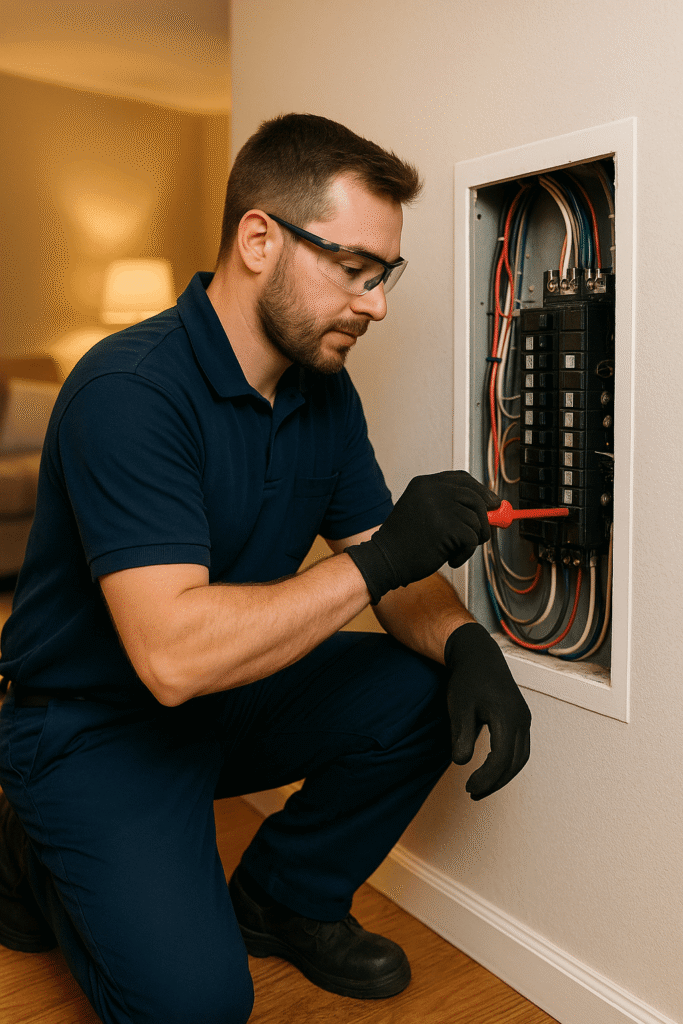
Electrician in a navy uniform working on a home electrical panel
Common Needs

Common Residential Electrical Needs

Most home electrical work falls into a few groups. Repairs fix things that have stopped working or are acting up. Installations add something new, such as outlets, fixtures or circuits. Inspections and upgrades look at the bigger picture of how safe and capable the system is.

Some needs are urgent, like a burning smell or a breaker that will not stay on. Others can be planned, like adding lighting or preparing for a remodel. Knowing which is which helps you decide how quickly to act. Landlords and owners of rental homes have similar needs, plus the responsibility of keeping tenants safe and coordinating access for repairs. Our article on electrical problems homeowners should never ignore explains which signs need fast attention.

For everyday faults with outlets, switches and fixtures, our electrical repair page explains what repair work involves.


Around the Home

Household Electrical Services

These are some of the areas homeowners ask about most.

Repairs

Outlets, switches, light fixtures, breakers and wiring faults that need fixing or replacing.

Panels and Circuits

Panel problems, repeated breaker trips, new circuits for appliances and capacity concerns.

Lighting and Fans

New and replacement light fixtures, ceiling fans, dimmers and switch upgrades.

Safety and Protection

GFCI and AFCI protection, smoke alarms, surge protection and electrical safety checks.

Older Homes

Electrical Concerns in Older Denver Homes

Denver has many older homes, and their electrical systems often reflect several decades of changes. You may find a mix of original wiring, later additions and newer devices in the same house.

Older homes can have fewer circuits, ungrounded outlets, older wiring methods or panels that were not designed for today’s loads. That does not mean everything needs replacing. Many older systems can be repaired or upgraded in steps once their condition is known.

Warning signs worth checking include warm outlets or switches, frequent breaker trips, flickering lights and outlets that no longer hold plugs firmly. An electrician can help you decide which updates matter most now and which can be planned for later. Our guide on when to schedule a home electrical inspection can help you plan.

Electrician in a cap and gloves working on a wall-mounted breaker panel
Planning Ahead

Renovations and Electrical Upgrades

Remodels are a good time to update electrical systems. Kitchen and bathroom projects often need new circuits, GFCI protection and lighting changes. Basement finishes and additions may need new wiring throughout. Here are some electrical upgrades worth considering during a renovation.

New appliances, EV chargers, home offices and heat pumps can also add load. Planning electrical needs early in a project helps avoid surprises and makes it easier to schedule permits and inspections. Many renovation projects in Denver need electrical permits and inspections before walls are closed, so it pays to ask early.

Smiling electrician in an orange hard hat and safety glasses
Safety

Home Electrical Safety and Inspections

An electrical safety inspection can help when you buy a home, move in, plan a renovation or notice repeated problems. It looks at the panel, wiring, outlets, switches and protection to find hazards and items worth planning for.

Some simple checks can also help. The CPSC’s home electrical safety checklist suggests making sure outlets and switches work and feel cool, and that plugs fit snugly. Have anything that does not pass those checks looked at by an electrician.

Keeping your panel labeled and the area in front of it clear also makes it easier and safer to shut off a circuit when needed. If you ever see smoke, sparks or flames, leave the home and call 911.

Costs

What Affects Residential Electrical Costs

Costs depend on the type of work and the home. Common factors include the scope of the job, the age and condition of existing wiring, access through walls, attics and crawl spaces, panel space and capacity, the materials and equipment chosen and whether permits and inspections are required. Grouping several small jobs into one visit can sometimes be more efficient than separate calls.

An electrician can explain options and give an estimate after looking at the work. Residential work is one part of what we do, alongside emergency electrical support in Denver when urgent problems happen.

Request Residential Electrical Services in Denver

Tell us about your home and what you need help with, whether it is a repair, an installation or a larger project. Send the details using the form below, and we will get back to you.

Common Questions

Residential Electrical Services FAQs

Answers for Denver homeowners.

Common needs include outlet, switch and fixture repairs, breaker and panel issues, new circuits, lighting and fan installation, safety inspections and upgrades.

Consider one when buying a home, before a renovation, after water or storm damage or when problems keep returning.

Often, yes. The right approach depends on the wiring’s condition. Some homes need targeted repairs, while others benefit from larger upgrades.

Overloaded circuits, short circuits, ground faults and worn breakers are common causes. Testing is needed to find which one applies.

The type and scope of work, wiring condition, access, panel capacity, materials and permits all affect cost.

Many do, especially new circuits, panel work and renovations. Your electrician can confirm what your project needs.

Need Our Help
Get in Touch