
Breaker Trips and Faults

Circuit Breaker Repair in Denver CO

A circuit breaker is a safety device. When it trips, it is telling you something is wrong on that circuit. Circuit breaker repair in Denver CO is about finding out why a breaker is reacting and fixing the real problem, whether that is the circuit, a connection or the breaker itself.

This page covers common breaker problems, what an electrician checks and when a breaker should be replaced instead.

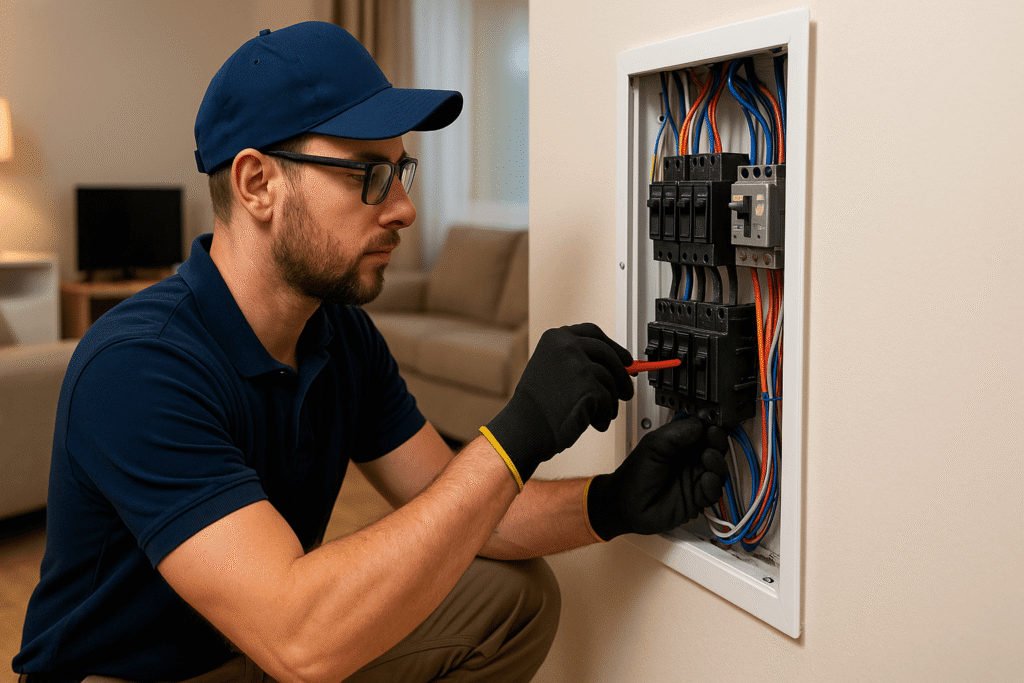
Electrician in a cap and gloves working on a wall-mounted breaker panel
How Breakers Work

What a Circuit Breaker Does

Each breaker in your panel protects one circuit. If too much current flows, or if there is a short circuit or ground fault, the breaker switches off to help prevent overheating and fire.

So a tripping breaker is usually doing its job. The real question is why it is tripping. The answer may be on the circuit, at a connection in the panel or in the breaker itself.

Breaker repair usually means correcting the cause of the problem. A breaker is a sealed device, so one that is worn or damaged is normally replaced rather than repaired internally.

Common Problems

Common Circuit Breaker Problems

These are the breaker issues people ask about most often.

Repeated Breaker Trips

A breaker that trips over and over may be reacting to an overloaded circuit, a short circuit or a ground fault somewhere on the circuit. The timing of the trips can offer clues, as explained in why a circuit breaker trips repeatedly.

Breakers That Will Not Reset

A breaker that trips again as soon as it is reset may indicate an active fault. It can also mean the breaker itself has failed.

Warm or Buzzing Breakers

Heat, buzzing or a burning smell near a breaker can be associated with a loose connection or a failing device. Treat this as urgent. Here is what can cause a circuit breaker to overheat.

Frequent AFCI or GFCI Trips

These breakers are designed to trip on specific faults. Frequent trips may point to a wiring issue, a connected appliance or a device problem.

Causes

Overloads, Short Circuits and Ground Faults

An overload happens when a circuit carries more current than it is designed for. Space heaters, hair dryers, microwaves and other high-power devices on the same circuit are common causes. The U.S. Fire Administration’s electrical fire safety tips also warn against overloading outlets and power strips.

A short circuit happens when a hot wire touches a neutral wire or another conductor. A ground fault happens when current takes an unintended path to ground, which can happen with water or damaged insulation. Both can make a breaker trip instantly.

These causes can look the same from the outside. Testing is what tells them apart.

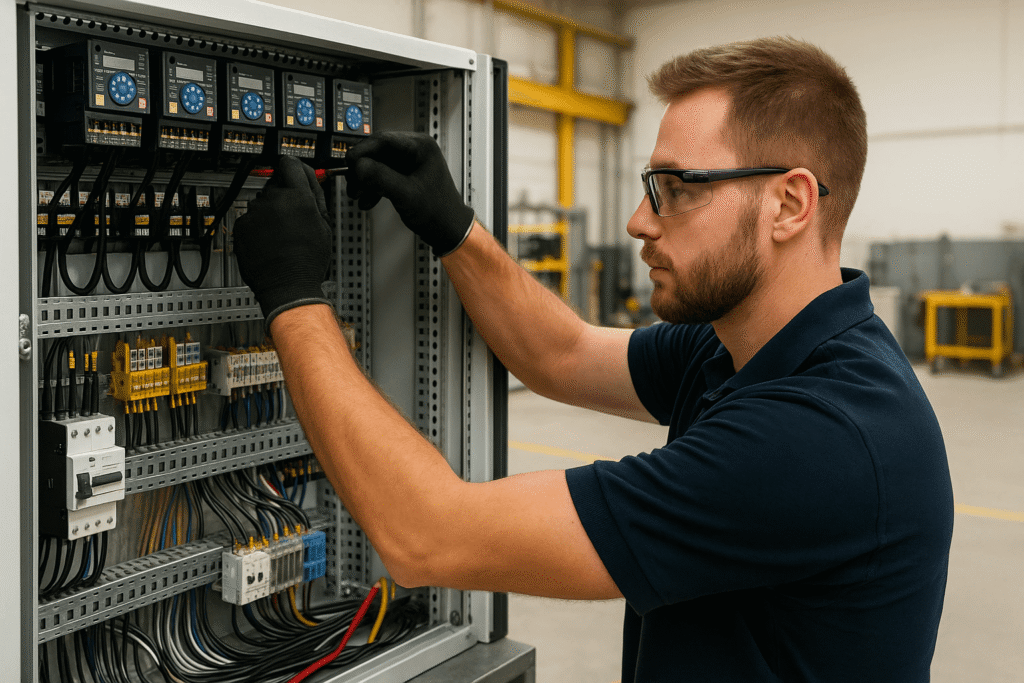
Electrician checking breakers in a commercial electrical panel
The Process

How a Breaker Problem Is Investigated

An electrician will usually ask when the breaker trips, what was running at the time and whether the problem is new. They then look at the panel and breaker, check connections and test the circuit for overloads, shorts and ground faults.

If the cause is on the circuit, the fix may involve a damaged outlet, a failed connection or moving a heavy load to another circuit. If the cause is not obvious, broader electrical troubleshooting may be needed.

Repair or Replace the Breaker?

If testing shows the breaker is defective, worn or damaged, the usual fix is circuit breaker replacement with a breaker suitable for the panel and the circuit. A breaker should never be swapped for a higher-amp one just to stop trips, because the wiring may not be rated for the extra current. Our article on whether a faulty circuit breaker can be repaired explains the difference between breaker problems and a failed breaker.

Smiling electrician in an orange hard hat and safety glasses
Safety

Breaker Safety: What Not to Do

If a breaker trips again after it has been reset once, leave it off and get the circuit checked. Resetting it again and again can keep a fault active and let damage build up.

Do not remove the panel cover, touch the wiring or try to repair a breaker yourself. If you smell burning, see scorch marks or notice heat at the panel, stop using the affected circuits. If you see smoke or fire, leave the building and call 911.

Costs

What Affects Breaker Repair Costs

The cost of fixing a breaker problem depends mostly on the cause. Fixing a single damaged outlet is a smaller job than tracing an intermittent ground fault through several rooms. Other factors include whether the breaker must be replaced, the type of breaker needed, the condition of the panel and access to the wiring.

Breaker work is part of the emergency electrician services in Denver we provide, and an estimate can usually be given once the cause is known.

Request Circuit Breaker Repair in Denver

Tell us which breaker is tripping, how often it happens and what was running at the time. Send the details using the form below, and we will get back to you about next steps.

Common Questions

Circuit Breaker Repair FAQs

Answers about breaker trips and breaker problems.

The most common causes are an overloaded circuit, a short circuit or a ground fault. A worn breaker can also trip more easily. Testing is needed to find the cause.

Breakers are sealed devices, so a faulty breaker is usually replaced rather than repaired. The repair work is often on the circuit, wiring or connection that caused the problem.

Loose connections, a failing breaker or a circuit carrying more load than it should can all create heat. A hot breaker should be checked soon.

Call if a breaker trips repeatedly, will not reset, feels warm, buzzes or smells like burning. If there is smoke or fire, call 911 first.

No. If a breaker trips again after one reset, leave it off and have the circuit checked. Repeated resetting can make a fault worse.

No. A breaker is sized to protect the wiring on its circuit. A larger breaker can let that wiring overheat.

Need Our Help
Get in Touch