Find the Cause First

Electrical Troubleshooting in Denver CO

Some electrical problems have an obvious cause. Others come and go, move from room to room or leave you guessing. Electrical troubleshooting in Denver CO is about finding the real cause before anything gets replaced.

Fixing the wrong part costs time and money, and it can leave a hazard in place. This page explains how fault finding works and what to expect.

Electrician checking breakers in a commercial electrical panel
When It Helps

When You Need Electrical Troubleshooting

Troubleshooting is useful whenever the cause of an electrical problem is not clear. That might be a breaker that trips at random times, lights that flicker in several rooms or an outlet that works one day and not the next.

It also helps after changes to a property. New appliances, a renovation or storm damage can all affect how circuits behave. In older Denver homes, years of small changes by different owners can make wiring harder to follow, so a careful check is often the first step.

The aim is simple: understand what is happening, why it is happening and what needs to be done next.

Symptoms

Electrical Symptoms With Unclear Causes

The same symptom can have more than one cause, which is why testing matters.

Repeated Breaker Trips

A breaker may trip because a circuit is overloaded, because of a short circuit or because of a ground fault. Each cause needs a different fix. Here is a closer look at why circuit breakers keep tripping.

Flickering or Dimming Lights

Flicker in one fixture often points to that fixture or its switch. Flicker across the whole home may involve the panel or the utility service.

Intermittent Power Loss

Power that cuts in and out can be associated with a loose connection, a worn device or a failing breaker. These faults can be hard to catch.

Dead Outlets and Circuits

An outlet may be dead because a GFCI outlet in another room has tripped, or because of a failed connection somewhere along the circuit.

The Process

How a Professional Electrical Assessment Works

Electrical troubleshooting usually starts with a conversation. The electrician will ask when the problem happens, which rooms are affected, what was running at the time and whether any recent work was done.

Next comes a visual check of outlets, switches, fixtures and the panel, followed by testing. Electricians commonly use testers and meters to check voltage, continuity and how each circuit behaves. Circuits may be isolated one at a time to narrow down where the fault is. You can read more about how an electrician finds an electrical fault.

NFPA’s electrical safety tip sheet offers general advice on reducing electrical fire risk at home while you wait for an assessment.

Intermittent Faults Take Patience

Faults that come and go can be the hardest to find. Keeping a simple log helps. Note the date, time, weather and what was running each time the problem shows up. Patterns in that log can point to the right circuit. Our article on what causes intermittent electrical problems explains the most common reasons.

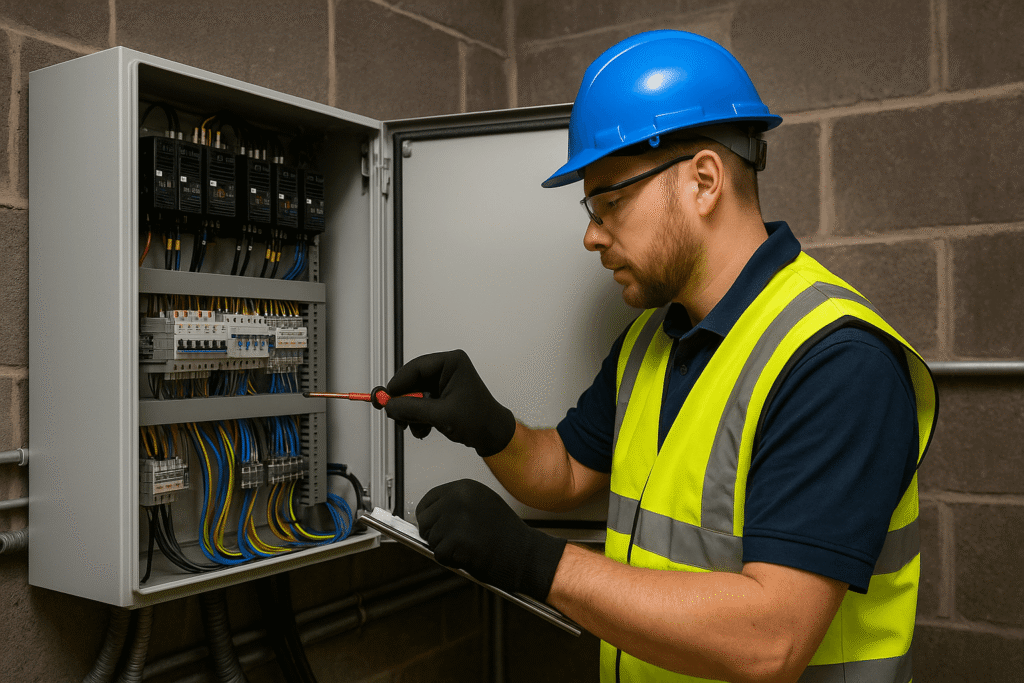
Electrician in a hard hat and safety vest inspecting an electrical control panel
Next Steps

From Diagnosis to Repair Recommendations

Once the cause is found, the electrician should explain it in plain language and outline your options. Some fixes are quick, such as tightening a loose connection or replacing a worn outlet.

Other findings lead to more work. A device or fixture problem may be handled as a standard electrical repair. Damaged or overheated wiring may call for electrical wiring repair. Ask questions until you understand what was found and why each step is recommended.

Smiling electrician in an orange hard hat and safety glasses
Costs and Urgency

What Affects Troubleshooting Costs

Troubleshooting costs depend mostly on how long it takes to find the fault. A problem that happens all the time is usually quicker to trace than one that appears once a week. The number of circuits involved, the age of the wiring and access to the panel, attic or crawl space also play a part.

When Urgent Help Is Appropriate

If any symptom involves heat, smoke, sparking or a burning smell, stop treating it as a puzzle and treat it as an emergency. Stop using the circuit, and leave and call 911 if you see smoke or fire. Then contact an emergency electrician in Denver.

Get Help Finding an Electrical Fault

Describe the symptoms, when they happen and which parts of the property are affected. Send the details using the form below, and we will get back to you to discuss next steps.

Common Questions

Electrical Troubleshooting FAQs

Answers about finding the cause of electrical problems.

Common causes include an overloaded circuit, a short circuit or a ground fault. Testing the circuit is the way to tell which one it is.

Flicker can come from a loose bulb, a worn switch, a loose connection or a problem in the panel. Flicker in many rooms at once should be checked soon.

An electrician gathers details about when the fault happens, inspects and tests the circuits involved and may isolate circuits one by one to narrow down the cause.

It may be protected by a GFCI outlet in another room that has tripped. If resetting that GFCI does not help, there may be a failed connection on the circuit.

Request one if problems keep coming back, if several circuits act strangely, after water or storm damage or before adding major appliances.

Troubleshooting finds the cause of a problem. Repair fixes the cause once it is known. Many jobs involve both.

Need Our Help
Get in Touch