Faulty and Damaged Breakers

Circuit Breaker Replacement in Denver CO

When a circuit breaker is worn, damaged or no longer works the way it should, replacing it is usually the safest fix. Circuit breaker replacement in Denver CO means installing a new breaker that is the right type and rating for your panel and the circuit it protects.

Here is when replacement makes sense, why compatibility matters and what affects the cost.

Electrician checking breakers in a commercial electrical panel
When It Is Needed

When a Breaker Needs to Be Replaced

A breaker may need to be replaced when testing shows it is not working correctly. Signs can include a breaker that will not reset, one that trips with no fault on the circuit, one that feels hot or shows burn marks, or one with a damaged handle or housing.

Wear can also play a part. Breakers that have tripped many times, or that have been exposed to heat or moisture, may not protect the circuit as reliably as they should. These signs that a circuit breaker needs replacing can help you know when to have it checked.

Not every tripping breaker needs to be replaced. Often the breaker is fine and the real problem is on the circuit, which is why circuit breaker repair and diagnosis usually come first.

Choosing the Right Breaker

Breaker Compatibility and Ratings

A replacement breaker must be suitable for both the panel and the circuit it protects.

Panel Compatibility

Breakers are designed for specific panels. A replacement should be a type the panel is listed and labeled to accept, not just one that fits physically.

Correct Amp Rating

The breaker’s rating must match the wire size and the needs of the circuit. A larger breaker should never be installed just to stop trips. Learn why you should not simply replace a circuit breaker with a higher amp rating.

Single-Pole or Double-Pole

Single-pole breakers serve 120-volt circuits. Double-pole breakers serve 240-volt loads such as dryers, ranges and some heating and cooling equipment.

Panel Condition and Space

If the panel is damaged, crowded or outdated, replacing one breaker may not be enough. A broader assessment may be needed.

Added Protection

AFCI and GFCI Breakers

Some circuits need extra protection. AFCI (arc-fault circuit interrupter) breakers are designed to detect dangerous arcing that can start fires. GFCI (ground-fault circuit interrupter) protection is designed to reduce the risk of electric shock, especially near water.

Electrical codes require AFCI or GFCI protection for many home circuits, such as those serving bedrooms, kitchens, bathrooms, laundry areas and outdoor outlets. The exact rules depend on the code in force and the type of work being done. When a breaker is replaced, an electrician can tell you whether the circuit needs one of these devices.

Electrician in a cap and gloves working on a wall-mounted breaker panel
The Process

What Professional Breaker Replacement Involves

Replacing a breaker means working inside the electrical panel, where some parts stay energized even when breakers are off. This work should only be done by a qualified electrician, and homeowners should not attempt it.

Typically, an electrician confirms the cause of the problem, checks the panel and its connections, selects a suitable breaker, installs it and tests the circuit. They may also look for heat damage on the panel’s bus bar or the circuit wiring, which can affect whether a new breaker alone will solve the problem.

When a Panel Upgrade Makes More Sense

If the panel is old, damaged or out of space, replacing one breaker may only be a short-term fix. In that case, an electrical panel upgrade may be worth discussing. Replacing one breaker and upgrading a panel are very different jobs.

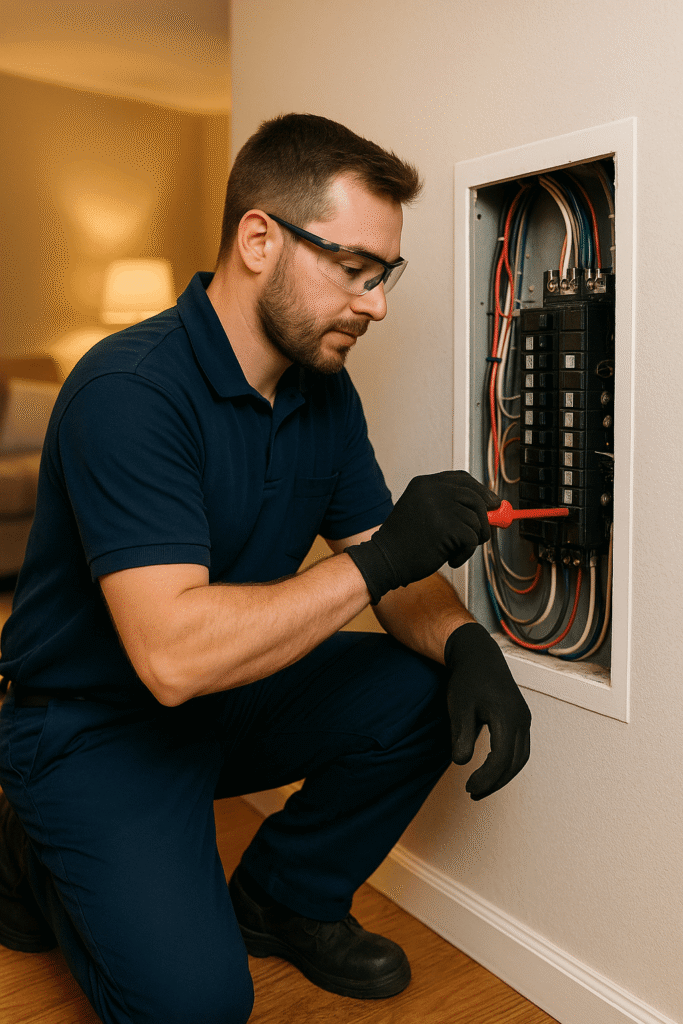
Electrician in a navy uniform working on a home electrical panel
Permits

Code Requirements, Permits and Inspections

Breaker replacement must follow the electrical code. Electrical work in Colorado must meet the National Electrical Code, and many jobs need a permit and inspection. The Colorado State Electrical Board’s permit and inspection information explains how permits and inspections work in the state.

In Denver, electrical permits are issued by the city. Your electrician can tell you whether your breaker replacement needs one.

Costs

What Affects Breaker Replacement Costs

The cost of replacing a breaker depends on several things:

  • The type of breaker, such as standard, AFCI, GFCI or dual-function
  • Single-pole or double-pole design
  • Availability of a breaker that suits the panel
  • The condition of the panel and its connections
  • Any circuit repairs found during diagnosis
  • Permit and inspection needs

An electrician can explain the options and give an estimate once the breaker and panel have been checked. Breaker replacement is one of the electrical services for Denver homes and businesses we offer. Our guide to circuit breaker replacement cost factors explains these in more detail.

Request Circuit Breaker Replacement in Denver

Let us know which breaker is causing trouble and what you have noticed, such as heat, buzzing or repeated trips. Send the details using the form below, and we will get back to you.

Common Questions

Circuit Breaker Replacement FAQs

Answers about replacing faulty or unsuitable breakers.

When testing shows it is defective, damaged, overheating or unable to reset or trip correctly. Burn marks or a damaged housing are also reasons to replace it.

Only if the old breaker was the problem. If trips are caused by an overload, short circuit or ground fault, a new breaker will trip too until the cause is fixed.

Yes. It must be a type the panel is designed and labeled to accept, with the correct rating for the circuit’s wiring.

No. A breaker protects the wire on its circuit. A breaker rated higher than the wire can let the wiring overheat.

It depends on where the circuit goes and the code requirements that apply. Bedrooms, kitchens, bathrooms, laundry areas and outdoor outlets often need this protection.

The breaker type, panel compatibility, panel condition, any circuit repairs and permit needs all affect the final cost.

Need Our Help
Get in Touch