Unstable Lighting

Flickering Lights Repair in Denver CO

Flickering lights are one of the most common electrical complaints. Sometimes the cause is minor, like a loose bulb. Other times, flicker can point to a loose connection or a larger problem in the electrical system. Flickering lights repair in Denver CO focuses on finding the real cause and fixing it.

This page explains what different flicker patterns may mean and when to get help.

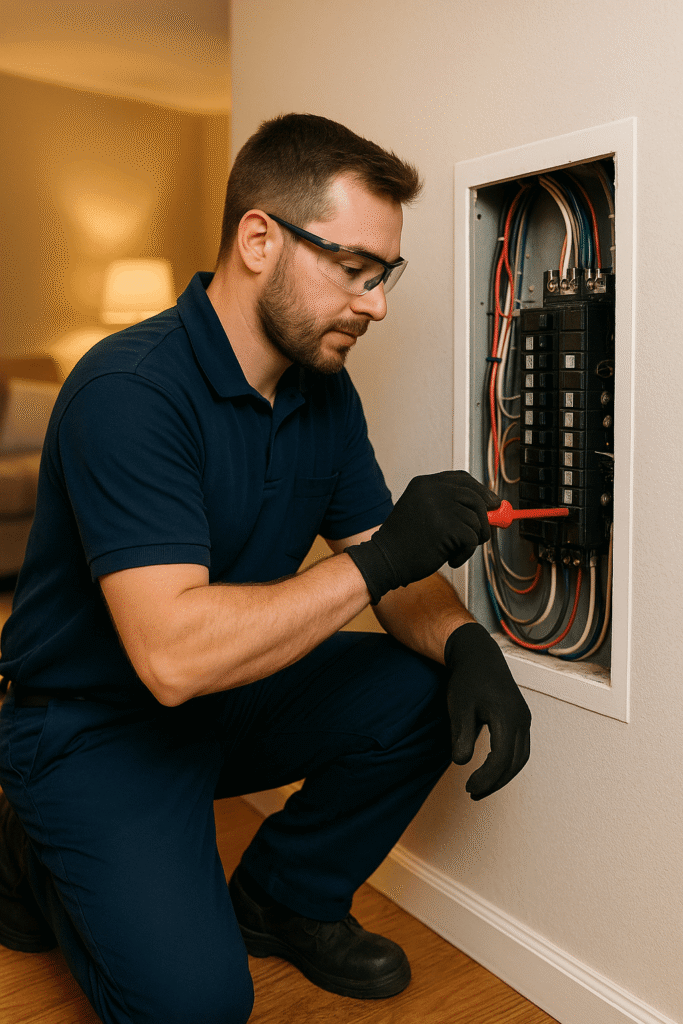
Electrician in a navy uniform working on a home electrical panel
Look at the Pattern

What Your Flickering Lights May Be Telling You

Where and when the flicker happens matters. A single light that flickers usually points to the bulb, the fixture or its switch. Several lights flickering on one circuit may point to a loose connection on that circuit.

Lights that dim briefly when a large appliance starts, such as an air conditioner or microwave, can be normal if the dip is small and short. Frequent or deep dimming, or flicker across the whole home, is more concerning and may involve the panel or the incoming service. Our article on why lights flicker when an appliance turns on explains when that is normal.

Flickering lights do not always mean faulty wiring. But because some causes are serious, persistent flicker should not be ignored.

Common Causes

Common Causes of Flickering Lights

Causes range from simple to serious. Testing is needed to know which one applies.

Bulbs and Fixtures

Loose bulbs, failing LED drivers and worn fixture sockets are common causes of flicker in a single light.

Dimmer Compatibility

Dimmers that are not matched to the LED bulbs they control can cause flicker, buzzing or lights that never fully turn off.

Loose Connections

A loose connection at a switch, outlet, fixture or junction box can make lights flicker and may create heat. Here is how loose wiring can cause flickering lights.

Panel or Supply Problems

Loose panel connections, overloaded circuits or voltage problems on the incoming service can cause widespread flicker.

Switches and Dimmers

Switches, Dimmers and LED Lighting

A worn switch can cause the lights it controls to flicker or cut out. If the problem starts when you touch or move the switch, the switch may be the cause. Our electrical switch repair page covers that in more detail.

Many homes now use LED bulbs on older dimmers. Not every dimmer works well with every LED bulb. Replacing the dimmer with one rated for the bulbs often solves the problem, and our electrical switch installation page explains how dimmers are matched to LED lighting.

Electrician wearing safety glasses working on commercial electrical wiring
When to Worry

When Flickering Lights Need Urgent Attention

Get help soon if flicker happens in many rooms at once, keeps getting worse or comes with buzzing, a burning smell or warm switches and outlets. These signs can be associated with loose connections or panel problems that create heat. Our guide on when flickering lights are a sign of a serious problem covers more warning signs.

If lights across the whole home brighten and dim sharply, or some appliances stop working while lights are dim, the cause may involve the utility supply. Contact Xcel Energy and an electrician. If you see smoke or fire, leave the building and call 911.

NFPA’s electrical safety tip sheet offers general guidance on electrical warning signs in the home.

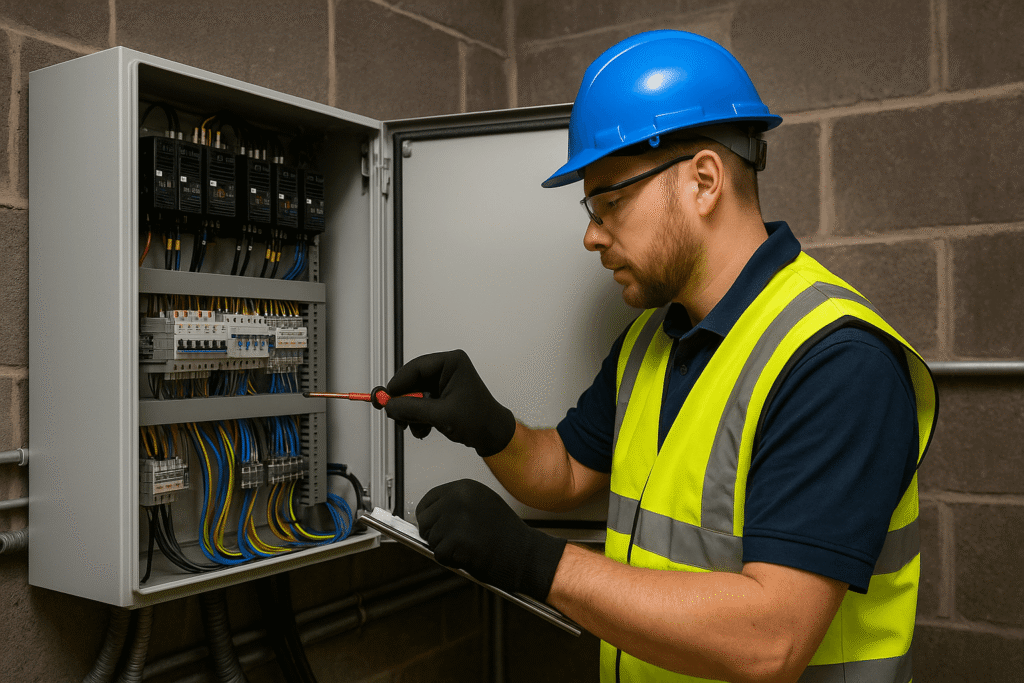
Electrician in a hard hat and safety vest inspecting an electrical control panel
The Process

How Flickering Lights Are Inspected and Repaired

An electrician will usually ask which lights flicker, when it happens and whether it is linked to appliances starting. They then check bulbs, fixtures, switches and dimmers, followed by connections on the affected circuit and in the panel.

Repairs depend on what is found. A bulb, dimmer or fixture may need to be replaced. Loose connections may need to be remade. Overloaded circuits may need loads moved or a new circuit added. Panel or service problems may need larger repairs.

If flicker only happens at certain times of day or during certain weather, a simple log of when it happens can help narrow down the cause. Outdoor fixtures exposed to Denver’s temperature swings can also develop worn sockets or loose connections over time.

Costs

What Affects Flickering Lights Repair Costs

The cost depends on the cause. Replacing a dimmer or fixture is usually simpler than tracing a loose connection inside a wall or fixing a panel problem. Other factors include how many lights are affected, how often the flicker happens, access to wiring and fixtures and whether permits are needed.

An electrician can explain the findings and give an estimate once the cause is clear. Lighting repair is one of the electrical services for Denver properties we offer.

Request Flickering Lights Repair in Denver

Tell us which lights flicker, how often it happens and whether it seems linked to appliances or switches. Send the details using the form below, and we will get back to you.

Common Questions

Flickering Lights Repair FAQs

Answers about flickering and dimming lights.

Causes include loose bulbs, worn fixtures, incompatible dimmers, loose connections, overloaded circuits and panel or supply problems.

Yes. A loose connection at a switch, outlet, fixture or panel can cause flicker and may create heat, so it should be checked.

Large appliances draw extra power when they start. A brief, small dip can be normal. Frequent or deep dimming should be checked.

Yes. A worn dimmer, or one that is not compatible with LED bulbs, is a common cause of flicker.

Have flicker checked if it affects many rooms, keeps getting worse or comes with buzzing, heat or a burning smell.

Often the cause is a bulb or dimmer mismatch, which is not usually dangerous. If changing the bulb or dimmer does not help, have the circuit checked.

Need Our Help
Get in Touch