Home Electric Vehicle Charging

EV Charger Installation in Denver CO

Charging an electric vehicle at home is convenient, but it can add a large new load to your electrical system. EV charger installation in Denver CO focuses on setting up Level 2 charging equipment safely, with the right circuit, protection and placement for your garage or driveway.

This page explains what affects an EV charger installation and what to check before you buy equipment.

Electrician wearing safety glasses working on commercial electrical wiring
Charging Levels

Level 1 and Level 2 Home Charging

Level 1 charging uses a standard 120-volt outlet. It needs no special equipment, but it adds range slowly, which may not be enough for daily driving.

Level 2 charging uses a 240-volt circuit, similar to an electric dryer or range. It charges much faster and is the most common choice for home charging. The U.S. Department of Energy’s guide to charging electric vehicles at home explains the difference between charging levels.

Most Level 2 chargers need their own circuit sized for the charger’s rating. Our dedicated circuit installation page explains how circuits for large loads are planned.
Planning

What Affects an EV Charger Installation

These factors help decide what kind of installation your home can support.

Panel Capacity

An electrician checks whether the panel and service can handle the extra load. Many homes can, but not all.

Charger Location

Distance from the panel to the garage or driveway affects wiring length, routing and cost.

Hardwired or Plug-In

Some chargers are hardwired. Others plug into a 240-volt outlet. Each has different wiring and protection needs.

Indoor or Outdoor

Outdoor installations need equipment and connections rated for the location and protected from weather.

Capacity

Electrical Panel Capacity and Load Calculations

Before installing a Level 2 charger, an electrician usually performs a load calculation. This looks at your home’s existing electrical demand, such as heating, cooling, cooking and laundry, and checks whether there is room for the charger.

Some homes have enough capacity for a charger without changes. Others may need a smaller charger setting, a load management device that limits charging when other demand is high, or an electrical panel upgrade. Not every home needs a panel upgrade, and not every panel can support every charger.

Older Denver homes with smaller services are more likely to need careful planning. A load calculation can also account for future plans, such as a second EV, a heat pump or a hot tub, so the installation does not leave you short later. Our article on installing a Level 2 EV charger at home covers what to check first.

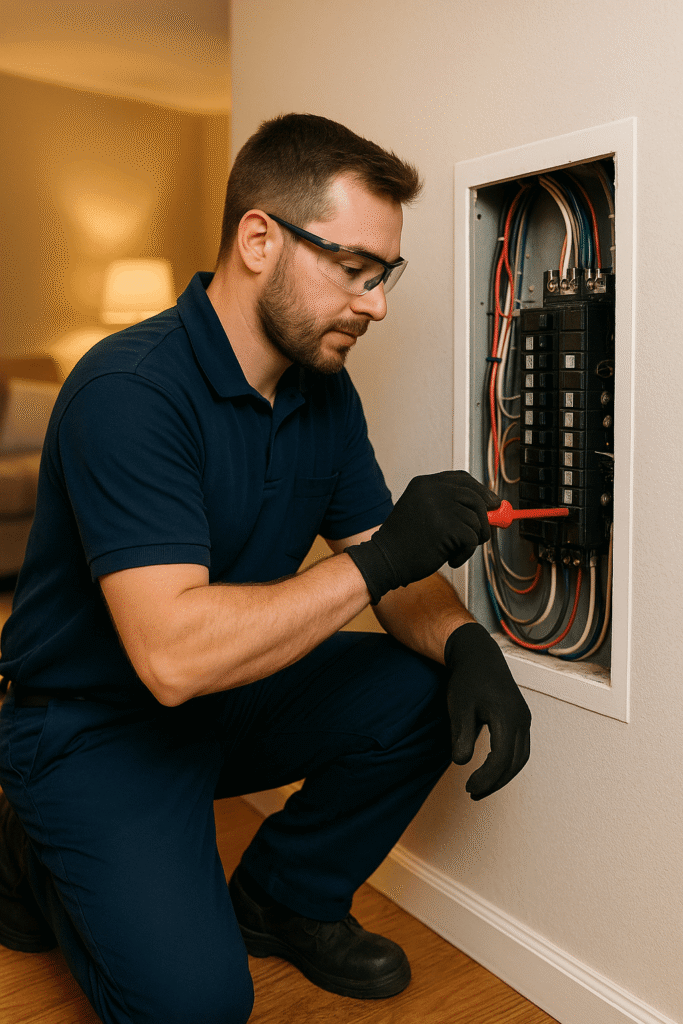
Electrician in a navy uniform working on a home electrical panel
Equipment

Hardwired vs. Plug-In Chargers

A hardwired charger connects directly to the circuit. A plug-in charger uses a 240-volt receptacle. Plug-in setups make it easier to replace the charger later, but the outlet must be suitable for heavy, continuous use.

Under the 2023 National Electrical Code, which Denver enforces, many 240-volt outlets in garages and outdoors need GFCI protection. Charger instructions may also specify circuit size and protection. An electrician can explain which option fits your charger and space. It also helps to understand whether a home EV charger needs a dedicated circuit.

Electrician in a cap and gloves working on a wall-mounted breaker panel
Permits

Denver Permits and Inspections

Installing an EV charger circuit is electrical work that generally needs a permit and inspection in Denver. Licensed electrical contractors can pull permits, and inspections confirm that the wiring, protection and equipment were installed safely. Our guide on EV charger permits in Denver explains what to expect.

Incentives for EV chargers change over time. Check current programs with Xcel Energy and government sources before you buy, rather than relying on old information.

Do not try to install a 240-volt charger circuit yourself unless you are qualified. Mistakes can cause overheating, shock or fire.

Your daily driving distance and how long the car is parked at home overnight also help decide what charger size makes sense. Many drivers do not need the largest charger available.

Costs

What Affects EV Charger Installation Costs

Installation costs vary from home to home. Common factors include:

  • The charger’s power rating and whether it is hardwired or plug-in
  • Distance from the panel to the charger location
  • Whether the panel has room and capacity for a new circuit
  • Whether load management or a panel upgrade is needed
  • Indoor or outdoor installation and wall or trenching work
  • Permit and inspection requirements

An electrician can give an estimate after checking your panel and the charger location. EV charger work is part of the EV and home electrical services in Denver we provide.

Request EV Charger Installation in Denver

Tell us about your vehicle, the charger you plan to use, where you want it installed and the size of your electrical panel if you know it. Send the details using the form below, and we will get back to you.

Common Questions

EV Charger Installation FAQs

Answers about home EV charging.

In many homes, yes. An electrician checks the panel, capacity and wiring route to confirm what your home can support.

Level 2 chargers usually need their own circuit sized for the charger, based on its rating and installation instructions.

Not always. A load calculation shows whether your panel has room. Some homes need load management or an upgrade, while others do not.

Installing a new charger circuit generally requires a permit and inspection in Denver.

Charger rating, distance from the panel, panel capacity, load management or upgrade needs, location and permits all affect cost.

Both can work. Hardwired chargers avoid an outlet, while plug-in chargers are easier to swap later. The right choice depends on the charger and space.

Need Our Help
Get in Touch