Dead, Loose and Damaged Outlets

Electrical Outlet Repair in Denver CO

Outlets get used every day, so it is no surprise that they wear out. When an outlet stops working, feels warm or no longer holds a plug firmly, it needs attention. Electrical outlet repair in Denver CO focuses on finding out why an existing outlet is failing and fixing it safely.

This page covers common outlet problems, what an electrician checks and when repair turns into replacement.

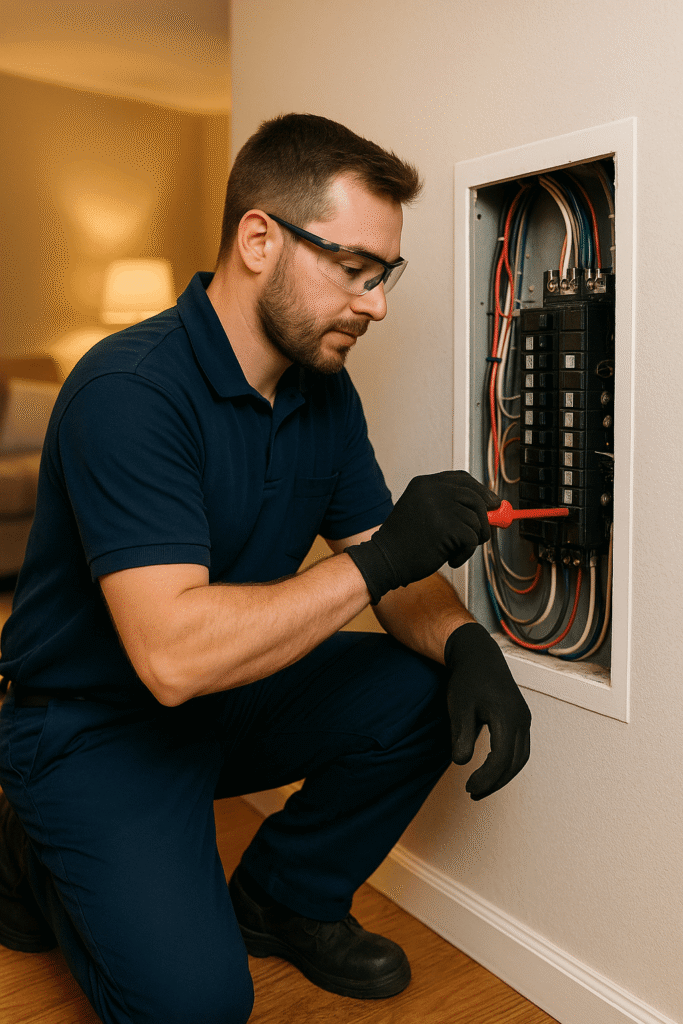
Electrician in a navy uniform working on a home electrical panel
Common Problems

Why Electrical Outlets Stop Working

An outlet can stop working for several reasons. A breaker may have tripped, a GFCI outlet elsewhere on the circuit may have cut power, or a connection behind the outlet may have loosened or failed. Our article on why an electrical outlet stops working walks through the common causes.

Outlets also wear out. The metal contacts that grip a plug lose tension over time, so plugs start to sag or fall out. A loose plug fit can create heat at the contact points, which is one reason worn outlets should not be ignored.

Some problems are not in the outlet at all. Older outlets are sometimes wired so that power passes through one outlet to reach the next. A failed connection at one outlet can then leave several others dead.


Warning Signs

Outlet Problems That Need Attention

These signs may indicate an outlet fault. Only an inspection can confirm the cause.

Loose or Worn Receptacles

Plugs that slip out, an outlet that moves in the wall or a cracked face can point to worn parts or a loose mounting. Here is why a loose electrical outlet can be dangerous.

Warm or Discolored Outlets

An outlet or cover plate that feels warm, or shows brown or black marks, can be associated with overheating at a connection. Learn what causes an electrical outlet to feel warm.

Sparking Outlets

A tiny spark when a plug goes in can be normal. Larger sparks, repeated sparking or a popping sound may indicate a damaged outlet or loose wiring.

Intermittent Power

An outlet that works one moment and not the next often points to a loose connection, either at the outlet or somewhere upstream.

Safety First

What to Do About a Sparking or Hot Outlet

If an outlet sparks, smokes, smells like burning or feels hot, stop using it. Unplug devices only if you can do so safely, and keep people and pets away. Do not remove the cover plate or touch the wiring.

If you see smoke or flames, leave the building and call 911. Once the area is safe, the outlet and its circuit should be checked by an electrician before it is used again.

The U.S. Fire Administration’s electrical fire safety tips also recommend replacing wall outlets where plugs fit loosely and avoiding overloaded outlets.

Electrician in a cap and gloves working on a wall-mounted breaker panel
The Process

How an Outlet Problem Is Inspected

An electrician will usually start by asking which outlets are affected and when the problem began. They will check for tripped breakers and GFCI devices, then test the outlet and the ones around it.

With power off, they can look at the outlet’s connections, the condition of the wires and the electrical box. Burned insulation, loose screws or damaged wire ends can all affect whether a simple fix is enough.

If the wiring itself is damaged, the job may move from outlet repair to electrical wiring repair.

Smiling electrician in an orange hard hat and safety glasses
Making the Right Choice

Outlet Repair or Replacement?

Not every outlet can be repaired. In many cases, the outlet itself is replaced and the connections behind it are corrected. Replacement is usually the right choice when the outlet is cracked, scorched, loose in its grip or simply worn out.

Sometimes the outlet is fine and the problem is elsewhere, such as a loose connection upstream or a faulty circuit. An electrician can explain what was found and why a repair or replacement is recommended.

If you need outlets in new places rather than fixes to existing ones, see our electrical outlet installation page.

Costs

What Affects Outlet Repair Costs

The cost of outlet repair depends on what is causing the problem. Common factors include:

  • The number of outlets affected
  • Whether the outlet is repaired or replaced
  • The type of outlet, such as standard, GFCI or tamper-resistant
  • The condition of the wiring and electrical box
  • How long it takes to trace an intermittent fault

An electrician can give an estimate once the problem has been checked. Outlet work is part of the electrical repairs for Denver homes and businesses we provide.

Request Electrical Outlet Repair in Denver

Tell us which outlets are giving you trouble and what you have noticed, such as heat, sparking or loss of power. Send the details using the form below, and we will get back to you.

Common Questions

Electrical Outlet Repair FAQs

Answers about outlets that are not working properly.

Common causes include a tripped breaker, a tripped GFCI outlet elsewhere on the circuit, a loose connection or a worn-out outlet. Testing is needed to find the cause.

Sometimes the connections can be fixed, but damaged outlets are often replaced. A cracked, scorched or worn outlet should be replaced rather than reused.

Large or repeated sparks can be associated with loose connections, damaged outlets or overloaded circuits. Stop using the outlet and have it checked.

Replace an outlet that no longer grips plugs, feels warm, is cracked or discolored or keeps failing. A GFCI outlet that will not reset may also need replacing.

The number of outlets, the type of outlet, the condition of the wiring and how long it takes to find the fault all affect cost.

An outlet should be cool to the touch. A warm outlet may indicate overheating, so stop using it until it has been checked.

Need Our Help
Get in Touch