

Ground-Fault Protection

GFCI Outlet Installation in Denver CO

Water and electricity are a dangerous mix. A ground-fault circuit interrupter, or GFCI, is designed to cut power quickly when it senses current going where it should not, such as through a person. GFCI outlet installation in Denver CO adds or replaces this protection in the places where shock risk is highest.

This page explains how GFCI protection works, where it is commonly needed and what to consider in older homes.

Electrician wearing safety glasses working on commercial electrical wiring
How It Works

What GFCI Protection Does

A GFCI constantly compares the current flowing out on a circuit with the current coming back. If the difference is even very small, it shuts off power in a fraction of a second. That fast response is what helps prevent a serious shock.

GFCI protection does not replace safe habits around water, but it adds an important layer of protection in kitchens, bathrooms and other damp areas. GFCI outlets have test and reset buttons on the face, so you can check that they still work. It also helps to know how a GFCI outlet differs from a regular outlet.

The U.S. Consumer Product Safety Commission’s GFCI fact sheet explains how GFCIs work and recommends testing them monthly.

Common Locations

Where GFCI Protection Is Commonly Needed

Code requirements depend on the location and the work being done. These areas commonly need GFCI protection.

Bathrooms and Kitchens

Outlets near sinks and kitchen countertops are among the most common places for GFCI protection.

Garages and Basements

Garage outlets and outlets in unfinished basements and crawl spaces are commonly protected because floors can be damp.

Laundry Areas

Outlets near washers and utility sinks are often required to have GFCI protection.

Outdoor Outlets

Outdoor receptacles need GFCI protection along with weather-resistant devices and suitable covers.

Options

GFCI Outlets vs. GFCI Breakers

GFCI protection can be provided in more than one way. A GFCI outlet replaces a standard outlet and protects that outlet, and it can also protect other outlets connected after it on the same circuit.

A GFCI breaker is installed in the electrical panel and protects the whole circuit. It can be a good option when several protected outlets are on one circuit or when outlets are hard to reach. Our circuit breaker replacement page explains how breakers are matched to a panel.

Not every outlet in every room needs to be a GFCI outlet. What matters is that the right locations have protection, whether from an outlet or a breaker. Our overview of where GFCI outlets are required in a home lists the common locations.

Smiling electrician in an orange hard hat and safety glasses
Older Homes

GFCI Protection in Older Denver Homes

Many older homes in Denver have two-slot outlets with no ground wire. A GFCI outlet can be used to add shock protection in these locations. When it is, the outlet must be labeled to show there is no equipment ground.

It is important to understand what that means. A GFCI adds ground-fault protection, but it does not create a ground wire. Some electronics need a true equipment ground, which may require new wiring.

An electrician can look at your existing wiring and explain whether GFCI protection, rewiring or both make sense.

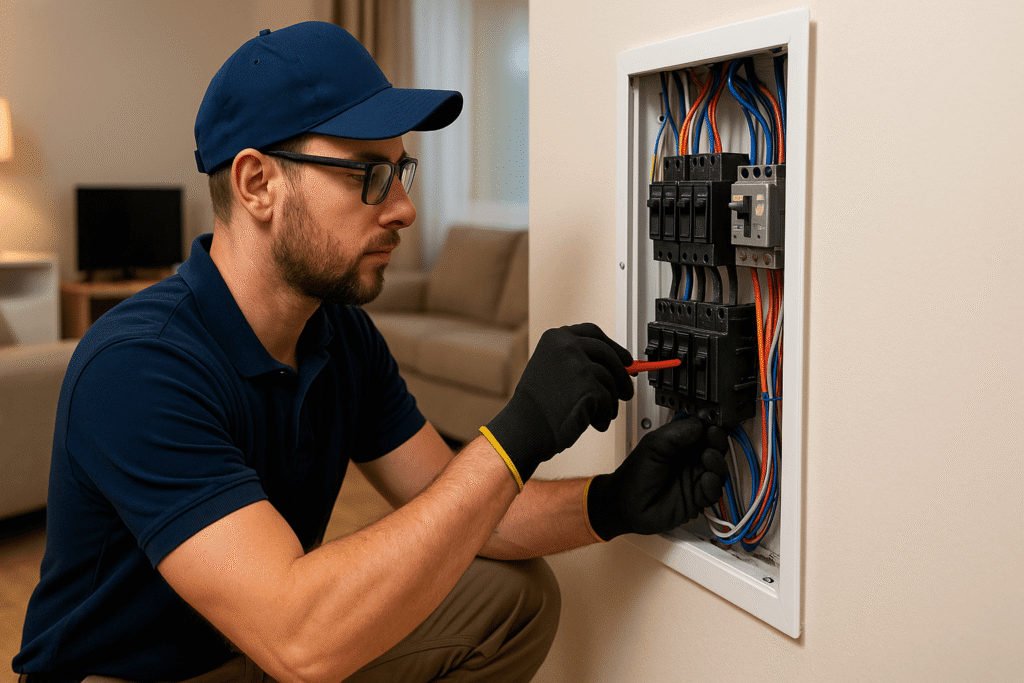
Electrician in a cap and gloves working on a wall-mounted breaker panel
Troubleshooting

Why GFCI Outlets Trip

A GFCI that trips is often doing its job. Moisture in an outdoor outlet, a damaged appliance cord or a fault on the circuit can all cause trips. Sometimes the GFCI device itself is worn and trips too easily, or will not reset.

If a GFCI keeps tripping, unplug what is connected to it and see whether the problem continues. If it does, have the circuit checked. Do not replace a GFCI with a standard outlet to stop the trips. Our article on why a GFCI outlet keeps tripping covers other possible causes.

Outdoor GFCIs often trip after snow, rain or sprinkler use when covers are missing or damaged. A weather-resistant in-use cover helps keep moisture out.

Costs

What Affects GFCI Installation Costs

The cost of GFCI installation depends on how protection is added. Factors include the number of locations, whether GFCI outlets or GFCI breakers are used, the condition of the existing wiring, whether boxes need to be replaced to fit the larger device and any permit requirements. In some cases, one GFCI outlet placed at the start of a circuit can protect other outlets after it, which may reduce the number of devices needed.

An electrician can recommend the right approach after checking your circuits. GFCI work is part of the services our emergency electrician in Denver CO team provides to homes and businesses.

Request GFCI Outlet Installation in Denver

Tell us which areas you want protected and whether you have outlets that keep tripping or will not reset. Send the details using the form below, and we will get back to you.

Common Questions

GFCI Outlet Installation FAQs

Answers about ground-fault protection.

Requirements depend on the code and the work being done, but bathrooms, kitchens, garages, laundry areas, unfinished basements and outdoor outlets commonly need GFCI protection.

A GFCI outlet monitors current and shuts off power quickly if it senses a ground fault. A regular outlet does not offer that protection.

Yes. GFCI outlets can protect two-slot outlets with no ground wire, but they must be labeled, and they do not create an equipment ground.

Moisture, a faulty appliance, a wiring fault or a worn GFCI can all cause trips. If it keeps happening, have the circuit checked.

The number of locations, GFCI outlets versus breakers, wiring condition, box size and permit needs all affect cost.

The CPSC recommends testing GFCIs monthly using the test and reset buttons, and after a power outage.

Need Our Help
Get in Touch