Replacing Outdated Wiring

Electrical Rewiring in Denver CO

Wiring is built to last a long time, but not forever. When a home or building has wiring that is worn, damaged or no longer suited to how the property is used, fixing one fault at a time may not be enough. Electrical rewiring in Denver CO replaces large sections of that wiring with new circuits that meet current code.

This page explains what rewiring involves, signs it may be worth considering and how partial and whole-home projects differ.

Electrician wearing safety glasses working on commercial electrical wiring
Project Overview

What Electrical Rewiring Involves

Rewiring means replacing existing branch circuit wiring, usually along with outlets, switches and connections, instead of repairing individual faults. Depending on the project, it can cover a few circuits, one floor or an entire building.

New wiring is run through walls, ceilings, attics, basements and crawl spaces. Electricians often reuse existing paths to limit wall openings, but some drywall or plaster work is common. Rewiring can also be a good time to add circuits for kitchens, laundry areas or home offices.

Because it is a major project, rewiring should start with a professional assessment of the existing system, not an assumption that everything must be replaced.
Warning Signs

Signs Your Wiring May Be Outdated

These signs do not prove a home needs rewiring, but they are worth having checked.

Frequent Electrical Problems

Breakers that trip often, outlets that fail on several circuits and repeated repairs in different rooms can point to wiring near the end of its useful life.

Worn or Brittle Insulation

Insulation that is cracked, crumbling or discolored where wiring is visible, such as in a basement or attic, may indicate aging or heat damage.

Too Few Outlets and Circuits

Heavy use of extension cords and power strips often means a home has fewer circuits and outlets than its current needs require.

Older Wiring Methods

Some older properties have knob-and-tube wiring, ungrounded two-wire circuits or aluminum branch wiring. Each should be judged on its condition, not its age alone.

Older Properties

Wiring Concerns in Older Denver Homes

Denver has many homes built before modern electrical standards, from early 1900s bungalows to mid-century ranch houses. Many have been updated over the years, so their wiring can be a mix of different ages and methods.

That does not mean every older Denver home needs rewiring. Some original wiring is still in serviceable condition, and some homes were partly rewired by earlier owners. The right answer depends on what an inspection finds, including the condition of insulation and connections, whether circuits are grounded and whether the system can safely handle today’s load. Our guide on when an older home needs rewiring covers the signs to look for.

If damage is limited to one area, targeted electrical wiring repair may be a better fit than a larger rewiring project.

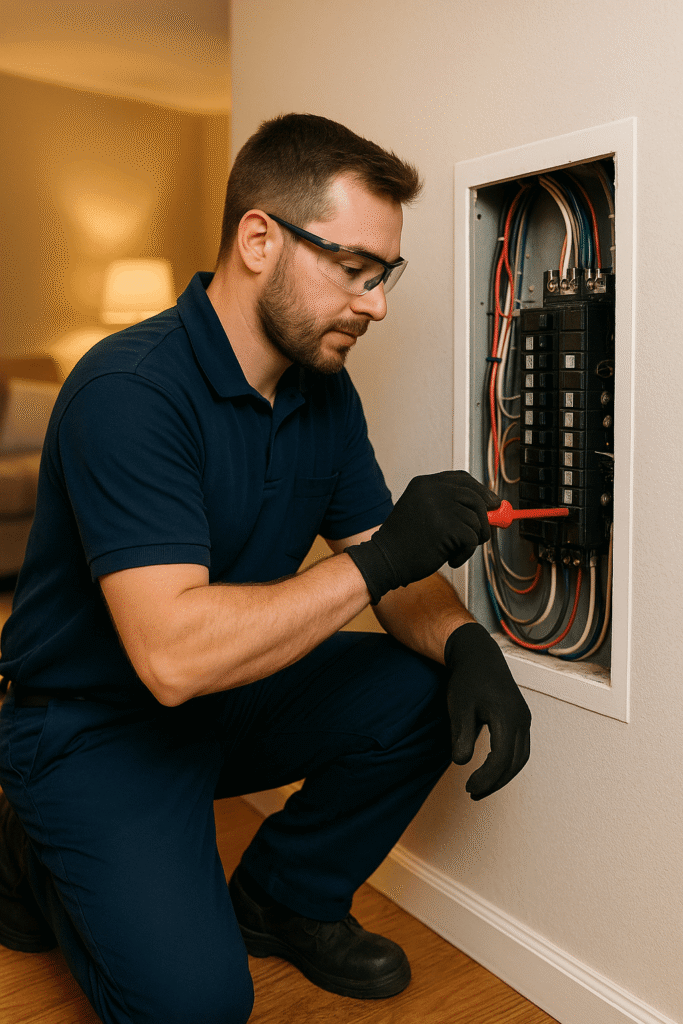
Electrician in a navy uniform working on a home electrical panel
Project Scope

Partial vs. Whole-Home Rewiring

A partial rewire replaces wiring in selected areas, such as a kitchen, a basement, an addition or a group of circuits that keep causing problems. It is often done during a remodel, when walls are already open.

A whole-home rewire replaces most or all of the branch circuit wiring in the building. It takes more planning and may be done in stages so the home stays livable. For a side-by-side look, see the difference between partial and whole-home rewiring.

Rewiring can also raise questions about the panel. If the existing panel is outdated or has no room for new circuits, an electrical panel upgrade may be part of the plan.

Safety During a Rewiring Project

Rewiring involves shut-off circuits, open walls and temporary power arrangements. Keep children and pets away from work areas, and never try to reconnect or test wiring yourself. If you notice a burning smell, sparking or smoke, leave the area and call 911.

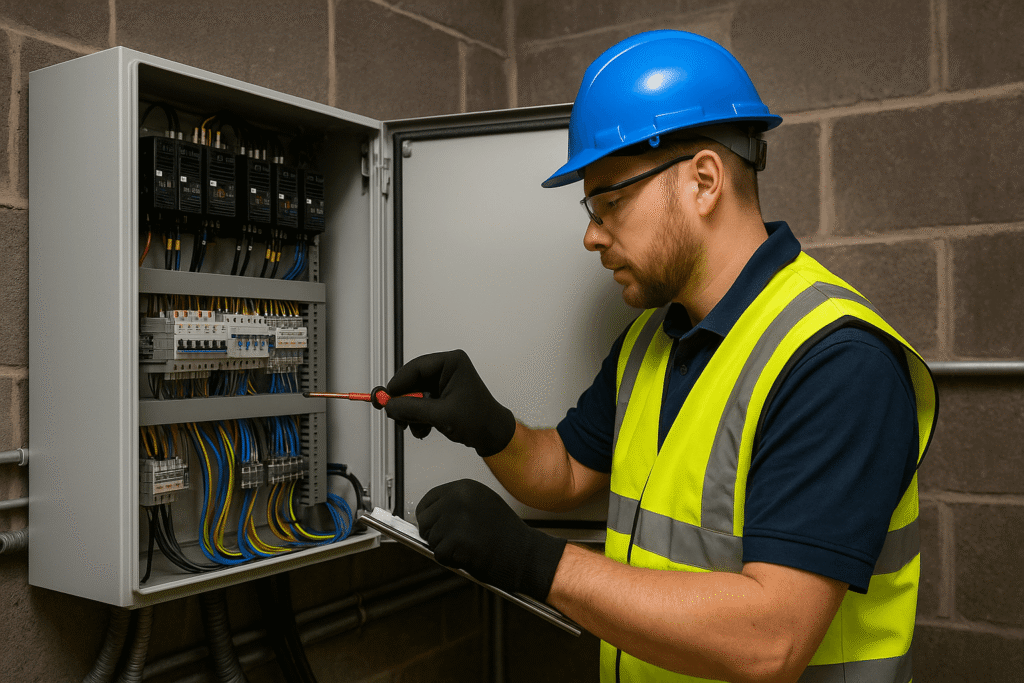
Electrician in a hard hat and safety vest inspecting an electrical control panel
Permits and Inspections

Permits and Inspections for Rewiring in Denver

Rewiring is significant electrical work that generally needs a permit and inspections. In Denver, electrical permits can be pulled by licensed electrical contractors, and in some cases by homeowners who meet the city’s requirements. The City and County of Denver’s homeowner permit information explains those rules.

Inspections usually happen before walls are closed and again when the work is complete. Planning around them helps keep the project on schedule.

Costs

What Affects Rewiring Costs

Rewiring costs vary widely from one property to another. Common factors include:

  • The size of the building and the number of circuits
  • Whether the project is partial or whole-home
  • Access through attics, basements and crawl spaces
  • Wall and ceiling materials, such as plaster or drywall
  • Panel changes needed to support new circuits
  • Permit, inspection and patching needs

An electrician can give an estimate after assessing the property. Rewiring is one of the residential and commercial electrical services in Denver we provide. You can also read about what affects the cost of rewiring a house.

Plan Your Electrical Rewiring Project

Tell us about the property, its age if you know it and the problems you have noticed. Send the details using the form below, and we will get back to you about an assessment.

Common Questions

Electrical Rewiring FAQs

Answers about rewiring homes and buildings in Denver.

Rewiring may be worth considering when wiring is damaged or deteriorated, when problems keep returning on many circuits or when the system cannot safely support how the home is used. An inspection is the best way to decide.

Partial rewiring replaces wiring in selected rooms or circuits. Whole-home rewiring replaces most or all of the branch wiring in the building.

In most cases, yes. Rewiring is significant electrical work, and Denver generally requires a permit and inspections for it.

Building size, number of circuits, project scope, access, wall materials, panel changes and permit requirements all affect cost.

Not always. Its condition, any later modifications and how it is being used all matter. An electrician can evaluate it and explain your options.

Often, yes, especially when the work is done in stages. Some circuits will be off for periods of time, so ask how the work will be scheduled.

Need Our Help
Get in Touch